

Fitness For Service – Local Metal Loss Level 1 Assessment. Part 3 of our 3 part series takes a look at the assessment of local metal loss. As we discussed in Part 1, there is strictly no definition of what constitutes local metal loss compared to general, so the accepted rule of thumb is to start with a Part 4 …
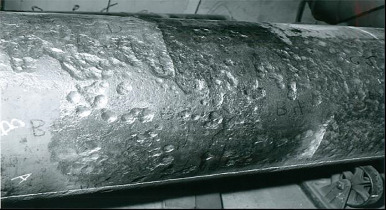
Fitness For Service – non-uniform metal loss. This is the second part in our 3-part Fitness For Service series for the assessment of metal loss using API 579 level 1 methodology. It’s best if you read Part 1 of the series first. Part 1 explains the difference between uniform and non-uniform loss, and addresses how to conduct a level …

The phone rings, my taxi is here. I kiss my family goodbye. My 4 year old runs off to play with something as my impending absence is instantly forgotten about. Unicorns are obviously much more interesting. My wife with a 7-month-old in her arms wishes me a safe journey before closing the door and rushing off to see what that …

What are the PSSRs and what do they cover? The Pressure Systems Safety Regulations 2000 (PSSR) cover the safe design and use of pressure systems with the aim to prevent serious injury from the hazard of stored energy (pressure) as a result of the failure of a pressure system or one of its component parts. The regulations are …

This article ‘Back to basics – Material Properties’ covers the essential properties when considering asset integrity. Material science in itself is a huge subject, with endless reference books and academic courses that cover the subject. Only a high-level understanding will be provided in this article. Stakeholders should be concerned with ensuring pressure equipment is safe to operate and the …

Pressure Relief Valves – Pressure equipment requires protection from over pressurisation. A common way to protect vessels is the installation of a pressure relief valve. A pressure relief device is actuated by inlet static pressure and designed to open during an emergency or abnormal conditions to prevent a rise of internal fluid pressure above the specified design value. This device …

Calculating Branch Connections: ASME B31.3 Para. 304.3.2 – Whenever a branch is added to the main pipe run (header) an opening is created by the removal of a predetermined amount of metal. We use Branch Connections: ASME B31.3 Para. 304.3.2 to consider the design. The header pipe is weakened as the metal removed is no longer there to resist the …

What is stress? Introduction In the most simplistic term, stress is simply a force divided by area. The most common unit we see in pressure equipment codes and standards is pounds per square inch (psi) for those that like imperial (and let’s face it, not many do). Or if you like to use SI units (metric) then we will often …

What is fitness for service? Fitness For Service (FFS) assessments are a set of methods that use quantitative data to determine if a degraded component is fit for continued service at the current operating parameters and to establish the useful remaining life of the component. Some case examples are found in this research paper. It is an analysis that …

Corrosion Basics Part 1 Salt is bad for your health! – Corrosion basics Definition: Corrosion is the degradation of a metal by its environment–it literally means to “eat-away”. Most metals do not naturally occur as a pure metal. In their natural state, they exist in the form of oxides. These metal oxides (or other metal compounds) must be refined to …