
On April 2, 2010, the catastrophic failure of a heat exchanger at the Tesoro Anacortes Refinery in Washington led to a deadly explosion, killing seven workers. The root cause was identified as High-Temperature Hydrogen Attack (HTHA), a damage mechanism that degrades steel when exposed to hydrogen at high temperatures and pressures. Although the equipment was operating under conditions deemed safe …
The Importance of Integrity Operating Windows (IOWs) in Inspection Programmes
Training | Oct 22, 2024


Mastering Technical Report Writing for Pressure Equipment Inspection and Assessment – In the field of pressure equipment inspection and assessment, the ability to produce a clear, accurate, and thorough technical report is an invaluable skill. These reports play a crucial role in documenting compliance, conveying the condition of critical equipment, and providing recommendations for maintenance or repair. A well-crafted report …

Pitting corrosion poses a serious threat to the integrity of metallic structures, primarily due to its highly localised nature. Unlike uniform corrosion, which affects larger areas more predictably, pitting targets small, concentrated spots on a metal’s surface, leading to the formation of cavities or “pits” that can penetrate deeply into the material. Even when the overall mass loss is minimal, …

Ensuring the Integrity of Low-Pressure Vessels: Lessons from the Yenkin-Majestic Incident In this short article, I dive into the catastrophic failure at the Yenkin-Majestic resin plant, where poor design, inadequate pressure testing, and a failure to adhere to crucial safety codes led to a tragic explosion. This incident highlights the critical importance of ensuring that even low-pressure vessels are designed …

FITNESS FOR SERVICE ASSESSMENTS (FFSAs) UNDERSTANDING THE FOLIAS FACTOR We like to keep things simple on our FFS training courses at Wilkinson Coutts. In FFS codes, the term shells describes pipes, vessels, and tanks collectively. The FOLIAS factor (M) is a critical component in assessing these shells. So, what is it? It’s just a stress concentration factor to acknowledge …

A-Z of Pressure Equipment Integrity We’re often asked, “What kind of things do your courses cover?” Well, we couldn’t get that all down on here, but here is an A-Z snapshot of some common topics that are covered in our training courses. A – Anodic Protection Anodic protection is a technique used to prevent the corrosion of metal surfaces by …

Navigating Temporary Repairs: Risks and Compliance Essentials Post Construction Codes (PCCs) API 510/570/653 define these as temporary repairs but a feature of ASME PCC-2 is that it provides technical details and leaves the user to decide themselves. What is temporary? There’s no agreed definition of temporary. The nearest is from API codes as ‘to the next maintenance/replacement opportunity’. Temporary …
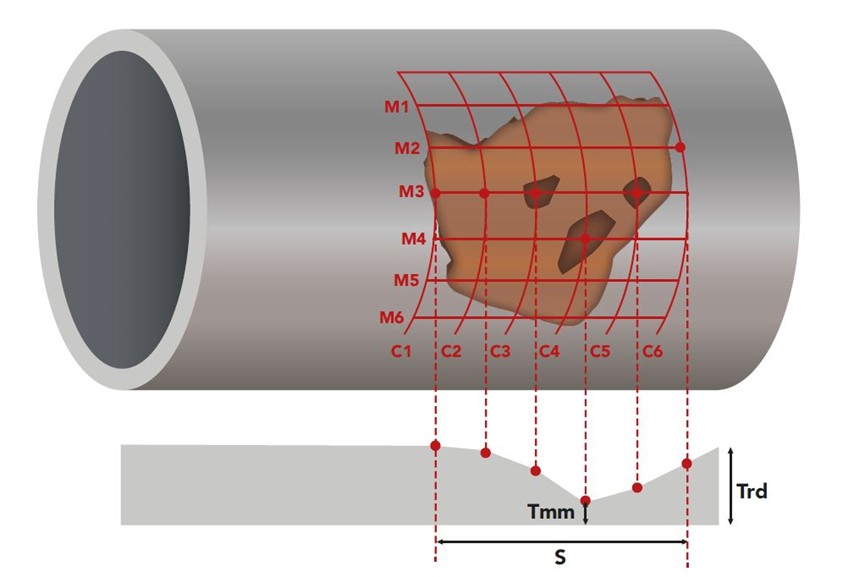
FITNESS FOR SERVICE ASSESSMENTS (FFSAs) R-R-R-R DECISIONS We see lots of FFSAs during our training and consultancy activities at WILKINSON COUTTS. With the best of intentions, things sometimes get more complicated than they need to be. Let’s simplify things…. There are only possible output decisions of a FFSA, as shown in table 1 below; Run (as-is) Re-rate Repair Replace …

What is Patina? Patina is a layer of corrosion that forms on the surface of metal objects, particularly those made of copper, brass, bronze, and other metal alloys. Patina is formed by a combination of chemical and physical processes, including oxidation, corrosion, and the accumulation of pollutants and other substances on the metal surface. Patina can have a variety of …
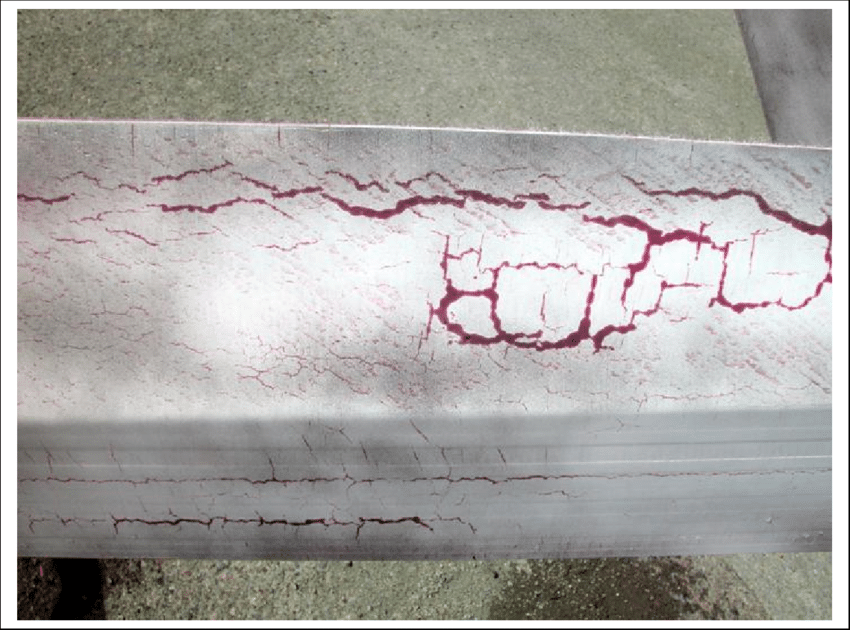
Chloride Stress Corrosion Cracking (SCC) is a type of corrosion that can occur in metal alloys, especially in those that are used in corrosive environments. It occurs when metal components are exposed to both tensile stress and chlorides, forming cracks in the material. The damage caused by Chloride SCC can be severe and can result in material failure, leading to …