

A-Z of Pressure Equipment Integrity We’re often asked, “What kind of things do your courses cover?” Well, we couldn’t get that all down on here, but here is an A-Z snapshot of some common topics that are covered in our training courses. A – Anodic Protection Anodic protection is a technique used to prevent the corrosion of metal surfaces by …

Navigating Temporary Repairs: Risks and Compliance Essentials Post Construction Codes (PCCs) API 510/570/653 define these as temporary repairs but a feature of ASME PCC-2 is that it provides technical details and leaves the user to decide themselves. What is temporary? There’s no agreed definition of temporary. The nearest is from API codes as ‘to the next maintenance/replacement opportunity’. Temporary …

What is Patina? Patina is a layer of corrosion that forms on the surface of metal objects, particularly those made of copper, brass, bronze, and other metal alloys. Patina is formed by a combination of chemical and physical processes, including oxidation, corrosion, and the accumulation of pollutants and other substances on the metal surface. Patina can have a variety of …

When most hear the words Stress Corrosion Cracking (SCC), our minds immediately start thinking of Chloride induced SCC in stainless steels or Sulphide SCC. However, In March 2019, Step Change in Safety issued a Safety Alert about slightly less common phenomena of Methanol Stress Corrosion Cracking in Carbon Steels. The incident occurred on an outlet line from a …

Sometimes, A Little Change Is A Good Thing Fitness For Service Training – API 579/ASME FFS-1 – must be up there as one of the most comprehensive and helpful resources out there in the world of technical codes and standards. First published in January 2000 it provides the refining and petrochemical industry with various methods for the reliable …

Integrity Matters – New asset integrity magazine Coming in April 2022! We are introducing the NEW magazine for asset integrity professionals and pressure equipment stakeholders. Welcome to ‘Integrity Matters’. Keep abreast with the latest integrity safety alerts worldwide, new approaches to asset integrity, the latest NDE methods, relevant industry news, integrity job boards, technical tuition and much more. Our vision …

Fitness For Service – Local Metal Loss Level 1 Assessment. Part 3 of our 3 part series takes a look at the assessment of local metal loss. As we discussed in Part 1, there is strictly no definition of what constitutes local metal loss compared to general, so the accepted rule of thumb is to start with a Part 4 …
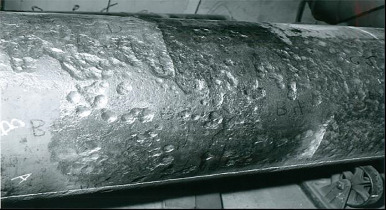
Fitness For Service – non-uniform metal loss. This is the second part in our 3-part Fitness For Service series for the assessment of metal loss using API 579 level 1 methodology. It’s best if you read Part 1 of the series first. Part 1 explains the difference between uniform and non-uniform loss, and addresses how to conduct a level …

The phone rings, my taxi is here. I kiss my family goodbye. My 4 year old runs off to play with something as my impending absence is instantly forgotten about. Unicorns are obviously much more interesting. My wife with a 7-month-old in her arms wishes me a safe journey before closing the door and rushing off to see what that …

This article ‘Back to basics – Material Properties’ covers the essential properties when considering asset integrity. Material science in itself is a huge subject, with endless reference books and academic courses that cover the subject. Only a high-level understanding will be provided in this article. Stakeholders should be concerned with ensuring pressure equipment is safe to operate and the …
- Page 1 of 2
- 1
- 2